AI in Software Development: Part 3
15.06.2026
David
David
AI in Software Development: Part 3
My New Day-to-Day as a Software Developer
We started evaluating AI for Collax at the beginning of the year, and since then my day-to-day as a software developer has changed dramatically. It’s no exaggeration to say that AI has revolutionized the way I work. Here are some of the most important changes I’ve experienced:
Unfamiliar / Legacy Codebases Barely Cost Time Anymore
What used to mean days of reading takes hours today. I have the structure explained to me, ask questions, ask about dependencies. And I’m productive before I’ve even read the most important files myself.
Debugging Has Become a Dialogue
Instead of brooding alone over a stack trace or a log file, I describe the problem and give rough hints about where I suspect it. The model asks counter-questions, suggests hypotheses, and helps me see my own blind spots.
Repetitive Code No Longer Exists
Interfaces, database migrations, tests - I no longer write them myself. The AI handles these tasks in a few minutes - structured, repetitive workflows are its strength. That gives me more time to focus on the creative and complex aspects of software development.
Minibus: A Practical Example
The biggest influence on the decision to integrate AI into our development process was the development of a new daemon that we needed for a new feature. It was a complex project that involved many different technologies and components. Without AI, I would probably have spent weeks planning the architecture, writing the code, and debugging it. With AI, I was able to finish the project in just a few days, and the result was even better than expected. The minibus project has been in productive use since release 7.2.40 and will play an important role in our infrastructure going forward. Minibus handles the execution of long-running actions in the background, such as the creation of Docker containers.
The Uncomfortable Truth for Junior Developers
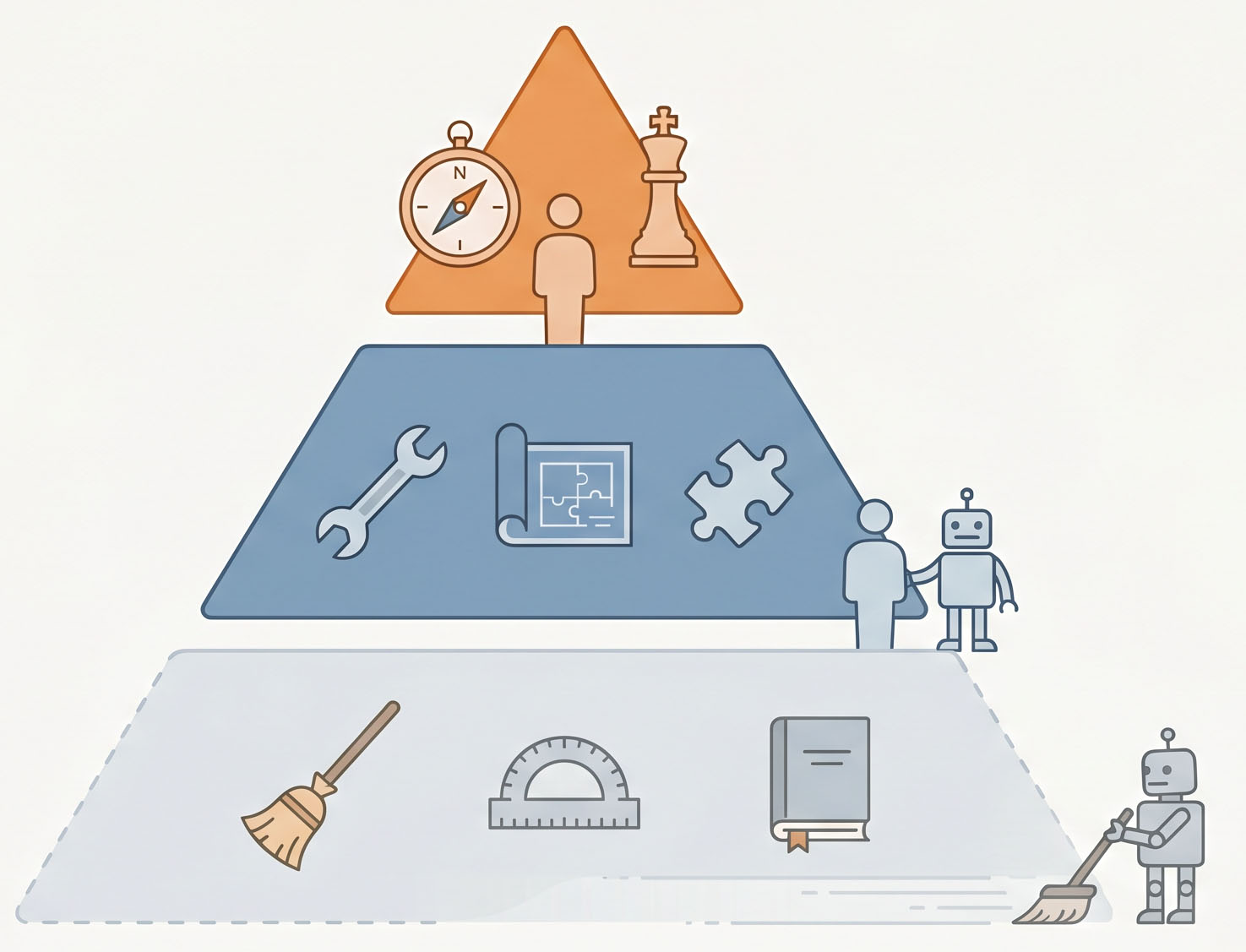
At Collax, I’m not only responsible for development tasks, but also for training new talent. And one has to be honest: for junior developers, things are getting really tight. Not because they would be bad developers. But because the tasks that used to be given to career starters are now handled by an AI model. Faster, cheaper, with no onboarding. Implementing simple features, writing boilerplate, adapting and debugging existing code - the AI takes care of all of it now.
That doesn’t mean no new talent is needed anymore. But getting into the industry is becoming harder. The path from beginner to experienced developer always led through these simple tasks. That path is becoming narrower.
Conclusion: Collax Will Use AI for the Development and Maintenance of Software Going Forward
For us it’s clear: AI is no longer just a nice add-on, but an indispensable tool for software development. It allows us to work faster, more efficiently, and more creatively. We will continue to invest in the development of AI tools and integrate them into our development process, to ensure that we always stay at the cutting edge and can deliver the best possible products to our customers.
Worth noting at this point is the catch-up race that open weights models have run in recent months. The Kimi-K2.6 model by Moonshot AI in particular has caught our attention.
This is the end of the blog series on AI in software development. I hope that our experiences and insights will be helpful to other developers and companies who are also considering integrating AI into their development processes.
Back to Part 1 - Development of AI Models
Back to Part 2 - Development of AI Tools for Software Development